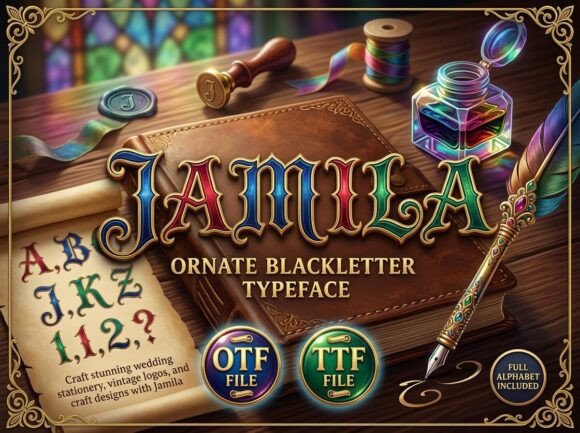
Jamila
Jamila is more than just a typeface—it's a portal to a world of timeless elegance and intricate detail. Its gothic structure and metallic textures evoke the mystique of ancient manuscripts and royal insignias, making it an ideal choice for designers seeking to infuse their work with a sense of legacy and sophistication.
In modern graphic design, typography plays a crucial role in shaping brand identity and visual communication. Jamila stands out as a versatile asset that can elevate any project, from wedding invitations to fantasy book covers. Its ornate features add depth and character, ensuring that every design feels unique and memorable.
Branding and Logo Design
For businesses aiming to establish a strong brand presence, Jamila offers a distinctive voice. It works exceptionally well for luxury brands, artisanal products, and creative enterprises looking to convey exclusivity and craftsmanship. When paired with a complementary color palette, it enhances visual hierarchy and reinforces brand messaging.
Logo designers often turn to Jamila when they need a font that commands attention without overwhelming the viewer. Its structured yet artistic form allows for flexibility in both digital and print formats, ensuring consistency across all brand touchpoints.
Marketing Materials
Whether designing brochures, business cards, or promotional flyers, Jamila brings a sense of refinement to marketing collateral. Its rich textures and detailed strokes make it perfect for creating eye-catching visuals that stand out in a crowded market.
When used in conjunction with bold imagery and strategic white space, Jamila helps guide the viewer’s focus and enhances the overall user experience. It’s particularly effective for campaigns targeting niche audiences who appreciate artistry and storytelling.
Social Media and Digital Content
On platforms like Instagram, Pinterest, and Facebook, visual appeal is key. Jamila adds a layer of sophistication to social media graphics, helping brands maintain a cohesive aesthetic while standing out from the competition.
Designers can use Jamila to create compelling captions, banners, and story templates that reflect their brand’s personality. Its adaptability makes it suitable for both casual and formal content, offering a balance between creativity and professionalism.
Editorial and Web Design
In editorial layouts, Jamila can be used to highlight key sections, such as headlines or featured articles. Its decorative elements add visual interest without compromising readability, making it a valuable tool for magazine designers and content creators.
For web and UI design, Jamila can be incorporated into headers, buttons, or decorative accents. However, it’s important to consider scalability and legibility, especially on smaller screens. Using it sparingly ensures that it enhances rather than hinders the user experience.
Practical Tips for Designers
- Consistency: Maintain a cohesive look by using Jamila in tandem with other fonts that complement its style.
- Readability: Avoid overusing Jamila in large blocks of text; it shines best in short, impactful phrases.
- Color: Pair it with jewel tones or metallic hues to emphasize its ornate details.
- Context: Consider the audience and purpose of the design before selecting Jamila as the primary typeface.
By thoughtfully integrating Jamila into your design workflow, you can create work that resonates on both an aesthetic and emotional level. Whether you're crafting a logo, designing a website, or developing marketing materials, this typeface offers a powerful way to express creativity and professionalism.
Ultimately, the right design choices can transform a simple concept into a compelling narrative. With Jamila, every element carries the weight of history and the promise of innovation, making it an invaluable resource for any designer committed to excellence.