Glass: A Display Font That Transcends the Ordinary
Glass is more than just a typeface; it's a visual experience that captures the essence of luxury and craftsmanship. Designed for those who demand excellence, this premium display font merges the elegance of crystal sculpture with the intricate artistry of Victorian engraving. Its unique design transforms each letter into a work of art, making it ideal for projects that require a touch of sophistication and grandeur.
The Artistry Behind Glass
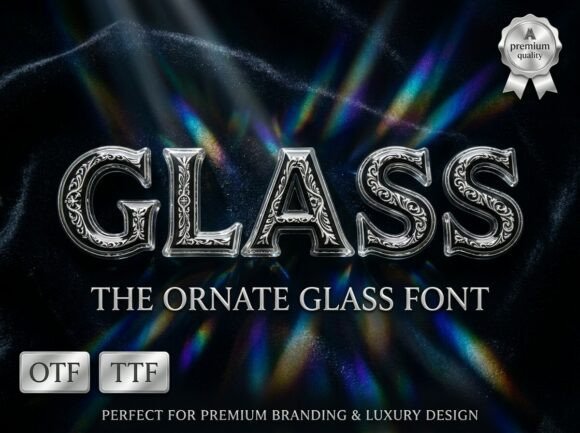
At its core, Glass is a high-impact serif typeface that features heavy, bold letterforms. What sets it apart is its hyper-realistic, volumetric translucent glass medium. This design element allows the font to catch and refract spectral rainbow light leaks, creating a dynamic visual effect that adds depth and dimension to any layout.
Each character in the Glass typeface is meticulously crafted with an ornate, hand-sculpted silver baroque filigree and swirling floral scrollwork. These details are not just decorative; they contribute to the overall tactile depth of the font, making it feel almost tangible even when viewed on a screen.
Applications for Premium Branding
Glass is an exceptional choice for premium branding campaigns. Its luxurious aesthetic makes it perfect for high-end spirit bottle labels, where the font can elevate the perception of the product. The intricate detailing and translucency of Glass add a sense of exclusivity and refinement that resonates with discerning consumers.
In the world of luxury cosmetics, Glass can be used to create logotypes that exude timeless beauty. The font’s ability to reflect light and its detailed inner core make it an ideal choice for packaging that needs to stand out on store shelves. Whether it's a perfume bottle or a skincare line, Glass brings a level of sophistication that enhances the brand's image.
Enhancing Book Covers and Movie Titles
For historical fiction book covers, Glass offers a way to evoke the past while maintaining a modern sensibility. The font’s Victorian-inspired elements blend seamlessly with the themes of many classic novels, providing a visual representation of the story’s setting and tone. This makes it a powerful tool for authors and designers looking to create compelling cover art.
Theatrical movie titles also benefit from the use of Glass. When used in title sequences, the font’s luminous quality can create a sense of drama and anticipation. Its ability to catch and refract light adds a cinematic flair that draws viewers in and sets the tone for the film.
Integrating Glass into Modern Workflows
Designers working on high-end projects often seek fonts that can deliver both aesthetic appeal and functionality. Glass fits this need perfectly, offering a balance between visual impact and readability. Its bold letterforms ensure that it remains legible even at smaller sizes, making it versatile for a range of applications.
In digital design workflows, Glass can be used across various platforms, including web design, print media, and social media graphics. Its adaptability allows it to maintain its visual integrity across different mediums, ensuring consistency in branding efforts.
Practical Benefits of Using Glass
One of the key advantages of Glass is its ability to convey a sense of unyielding professional prestige. This makes it particularly useful in industries where perception and image are crucial. Whether it's for a luxury brand, a high-profile event, or a prestigious publication, Glass helps communicate a message of excellence and refinement.
Additionally, the font’s unique design elements can help differentiate a project from competitors. In a crowded market, using a distinctive typeface like Glass can make a brand or product stand out, capturing the attention of the target audience.
Considerations When Choosing Glass
While Glass is a powerful tool, it’s important to consider its suitability for specific projects. Its intricate details and bold forms may not be appropriate for every design. For instance, in minimalist layouts, the complexity of Glass could overwhelm the composition, detracting from the intended message.
Designers should also consider the technical aspects of using Glass. Ensuring that the font is properly licensed and compatible with design software is essential. Additionally, testing the font in different contexts—such as varying sizes and backgrounds—can help determine its effectiveness in a given project.
Examples of Glass in Action
Imagine a luxury watch brand using Glass on its website. The font’s reflective qualities and detailed embellishments would complement the sleek, sophisticated design of the watches, reinforcing the brand’s commitment to quality. Similarly, a high-end fashion house might use Glass on its runway invitations, creating a sense of exclusivity and anticipation.
In the realm of publishing, a historical fiction novel could feature Glass on its cover, evoking the era in which the story is set. The font’s ornate details would resonate with readers, drawing them into the narrative and enhancing their overall experience.
Final Thoughts on Glass
Glass is more than just a typeface; it’s a statement. Its combination of craftsmanship, detail, and visual impact makes it a valuable asset for designers and brands looking to elevate their work. Whether used in print, digital media, or beyond, Glass has the power to transform ordinary designs into extraordinary experiences.