Autism Puzzle Decorative Display Font: A Creative Symbol of Connection and Diversity
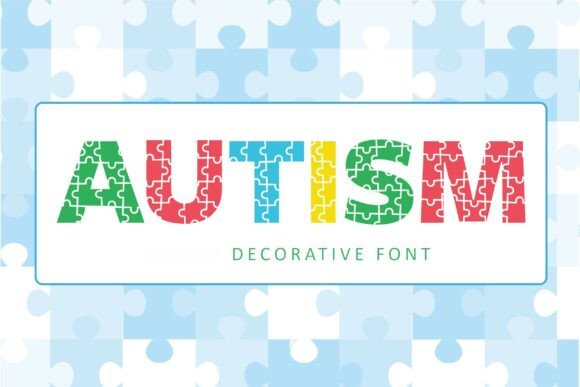
The Autism puzzle decorative display font is more than just a visual element—it’s a powerful statement of inclusivity, creativity, and awareness. Designed with bold, blocky letters that incorporate intricate puzzle-piece patterns, this font captures the essence of what it means to be part of the autism community. Each letter is a tribute to the unique perspectives and experiences that make up the rich tapestry of human diversity.
This font is ideal for those looking to create impactful visuals that resonate with both the autism community and the broader public. Its high-contrast design ensures visibility in various settings, while its friendly, accessible silhouette makes it approachable and inviting. Whether you're designing for a non-profit organization, an awareness campaign, or educational materials, the Autism font offers a versatile and meaningful way to convey your message.
What Makes the Autism Font Unique?
The Autism font stands out due to its distinctive puzzle-piece motif. Each letter is embedded with a detailed pattern that mimics the shape of a puzzle piece, symbolizing how different individuals come together to form a complete picture. This design not only serves as a visual representation of autism but also reinforces the idea that every person has a valuable role to play in the larger community.
Unlike traditional fonts, which often prioritize simplicity and uniformity, the Autism font embraces complexity and individuality. The bold, blocky structure gives it a strong presence, making it perfect for headlines, posters, and other eye-catching designs. At the same time, the font maintains a sense of warmth and accessibility, ensuring it can be used in a wide range of contexts without feeling overwhelming or alienating.
One of the key strengths of the Autism font is its adaptability. It can be used in both digital and print formats, making it a great choice for everything from social media graphics to event banners. Its high-contrast design ensures that it remains legible even at smaller sizes, while its intricate details add visual interest when used in larger formats.
Applications of the Autism Font in Modern Projects
The Autism font is particularly well-suited for projects that aim to promote awareness and understanding of autism. Non-profit organizations often use this font in their branding to create a consistent and recognizable identity. By incorporating the Autism font into logos, brochures, and promotional materials, these organizations can visually reinforce their mission and values.
For awareness campaigns, the Autism font provides a strong and memorable visual element. Whether it's a poster for a local event, a flyer for a support group, or a social media post, the font helps draw attention and convey the importance of the cause. Its puzzle-piece design also serves as a conversation starter, encouraging people to learn more about autism and the experiences of those who live with it.
In educational settings, the Autism font can be used to create engaging and informative materials. Teachers, educators, and curriculum developers can use it in lesson plans, classroom decorations, and student handouts to foster a more inclusive learning environment. The font’s friendly appearance helps make complex topics more approachable, while its structured design supports clarity and readability.
Community events, such as autism walks, fundraisers, and workshops, can also benefit from using the Autism font. Event organizers can incorporate it into signage, invitations, and promotional materials to create a cohesive and meaningful visual theme. By using the font consistently across all communication channels, they can build a stronger connection with their audience and reinforce the purpose of the event.
Why Choose the Autism Font for Your Brand or Project?
When selecting a font for your project, it’s important to consider both aesthetics and meaning. The Autism font excels in both areas, offering a visually striking design that also carries significant symbolic value. For brands that want to align themselves with the autism community, using this font can help establish a genuine and respectful connection with their audience.
Another advantage of the Autism font is its ability to evoke emotion. The puzzle-piece motif is a powerful metaphor for the way different people contribute to a shared understanding. By using this font, you’re not just choosing a style—you’re making a statement about the importance of diversity, inclusion, and collaboration.
From a practical standpoint, the Autism font is easy to work with. It is available in a variety of formats, including web fonts, vector files, and printable templates, making it accessible for designers, marketers, and content creators. Its versatility allows it to be used in a wide range of applications, from website headers to product packaging.
Additionally, the Autism font is designed with accessibility in mind. Its high-contrast color scheme and clear letterforms ensure that it is readable by people with varying levels of visual ability. This makes it an excellent choice for projects that aim to reach a broad and diverse audience.
How to Incorporate the Autism Font Effectively
To get the most out of the Autism font, it’s important to use it thoughtfully and intentionally. Start by considering the context in which it will be used. For example, if you’re designing a poster for an autism awareness event, the font can serve as the headline, drawing attention and setting the tone for the rest of the design.
When using the Autism font in digital formats, such as websites or social media posts, keep the surrounding text simple and clean. This helps prevent the font from becoming too overwhelming and ensures that your message remains clear and focused. Pairing it with a complementary typeface can also help balance the visual hierarchy and improve overall readability.
For print materials, such as brochures or business cards, consider the size and placement of the font. Larger text will allow the puzzle-piece details to shine, while smaller text may require a more subtle approach. Experimenting with different layouts and color schemes can also help you find the best way to showcase the font’s unique qualities.
Finally, always consider the message you want to convey. The Autism font is a powerful tool for promoting awareness, but it should be used with respect and care. Avoid using it in ways that could be seen as insensitive or trivializing. Instead, focus on creating visuals that honor the experiences of those within the autism community and encourage positive engagement.